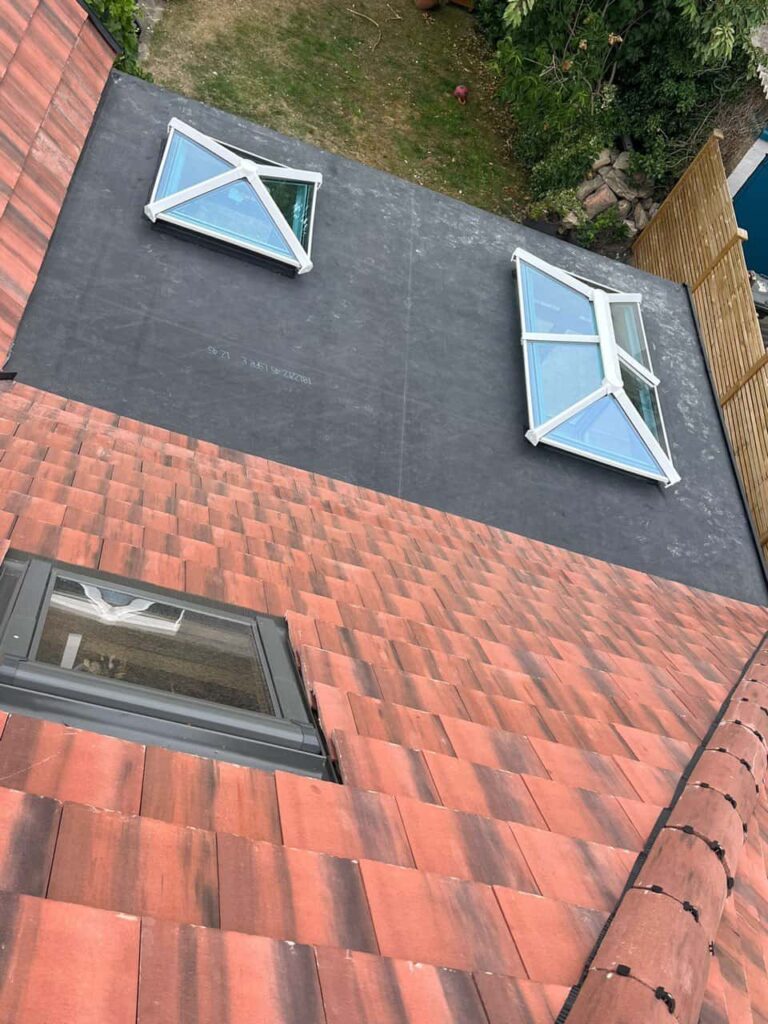
When a new roof problem develops close to a recently repaired area, it is natural to question whether the original work has failed. Sometimes the two issues are directly connected, but this is not always the case. The repair may remain sound while adjacent roofing materials continue to deteriorate.
The most useful response is to arrange a wider assessment rather than repeatedly patching whichever defect is currently visible. Establishing the relationship between the two problems can help prevent further leaks and ensure that the next repair addresses the underlying cause.
Why Roof Problems Can Appear Near Previous Repairs
A roof is formed from several connected components, including tiles or slates, underlay, battens, flashing, fixings and drainage details. When one component fails, the surrounding materials may already have been exposed to the same ageing, weather and moisture.
For property owners in Sutton in Ashfield, Nottinghamshire, a new defect near an earlier repair should be treated as a reason to examine the complete affected section.
Check Whether the Original Repair Is Still Sound
The first step is to inspect the previous repair and confirm whether it is continuing to perform as intended. A sound repair should remain properly secured, sealed and integrated with the surrounding roof covering.
If the repair itself has moved, separated or become damaged, it may need further attention. If it remains intact, the source of the new problem is likely to be elsewhere.
Avoid Assuming the Nearest Defect Is the Cause
Water can travel beneath tiles, along underlay and across structural components before appearing inside a property. A damp patch close to a previous leak does not prove that water is entering through the same point.
A professional inspection should compare internal moisture patterns with the roof’s external condition. This helps avoid applying another patch in the wrong location.
Examine the Surrounding Tiles or Slates
A previous repair may have replaced one visibly damaged tile while others nearby were already beginning to weaken. Ageing fixings, cracked coverings or deteriorated battens can allow additional tiles or slates to move later.
The inspection should extend beyond the repaired item to include neighbouring rows, overlaps and supporting components. This can reveal whether the new defect is isolated or part of a larger weakened area.
Consider Damage Beneath the Roof Covering
Water entering before the original repair may have affected underlay, battens, decking or timber. Repairing the surface does not automatically restore these concealed materials.
If underlay has torn or battens have weakened, moisture may find another route into the property. Where accessible, the underlying construction should be checked for dampness, decay and loss of strength.
Review Flashing and Roof Junctions
Problems often develop around chimneys, walls, valleys, roof windows and other junctions. Water entering through damaged flashing can spread beneath the covering and appear near a repaired tile or slate.
These details should be assessed as part of the same inspection. A local repair may be ineffective if water is being directed into the area from a higher junction.
Check the Roof’s Drainage
Blocked gutters, valleys or outlets can cause rainwater to overflow or collect where it should not. This may place additional pressure on an area close to the previous repair.
Important drainage checks include:
- Gutters and downpipe entrances
- Roof valleys
- Flat roof outlets
- Low points where water remains
- Junctions where two roof sections meet
- Signs of overflow around fascias or walls
Restoring effective drainage can be essential to preventing repeated water ingress.
Look for a Pattern of Wider Deterioration
One new fault does not necessarily mean that the entire roof is failing. However, several repairs within a small area may indicate that the surrounding materials are reaching a similar stage of deterioration.
Warning signs include:
- Multiple cracked or slipped tiles
- Brittle or torn underlay
- Repeated leaks after rainfall
- Widespread mortar deterioration
- Opening seams on a flat roof
- Several older patches close together
- Soft or damp roof decking
- Continued movement around fixings
Where these signs are present, repairing each symptom separately may not provide a dependable result.
Keep a Record of When Problems Appear
Information about the timing and conditions surrounding a leak can assist with diagnosis. Note whether water appears during light rain, heavy rainfall or wind-driven weather, and whether it begins immediately or several hours later.
Photographs of internal staining may also help track whether the affected area is changing. This information can guide the roof inspection without requiring the property owner to access the roof.
Do Not Attempt to Investigate From the Roof
Roof coverings can become slippery, and damage may make nearby materials unstable. Avoid climbing onto the roof or disturbing tiles to find the source of a leak.
A professional roofer can use appropriate access equipment to examine both the repaired section and the wider area safely. This also reduces the risk of creating further damage during the investigation.
Decide Between Another Local Repair and Wider Remedial Work
A further targeted repair may be suitable if the new fault is clearly defined and the surrounding roof remains serviceable. Examples include an independently cracked tile or an isolated flashing defect.
More extensive remedial work may be appropriate where several connected materials have deteriorated. The decision should be based on the condition of the affected roof section, not simply the number of repairs completed.
Why a Broader Professional Assessment Adds Value
The purpose of an assessment is not to assume that the roof needs extensive work. It is to understand why problems are recurring and identify the least disruptive solution likely to remain effective.
By checking the covering, underlay, battens, flashing and drainage together, a roofer can distinguish between an unsuccessful repair, a nearby independent defect and wider roof deterioration.
Conclusion
If one roof repair is followed by another problem nearby, avoid treating the new symptom in isolation. Confirm whether the previous repair remains sound, trace the route of any water ingress and examine the surrounding roof materials and drainage.
Sutton in Ashfield Roofing Repairs provides professional roof inspections and repairs in Sutton in Ashfield, Nottinghamshire. If a new issue has appeared close to an earlier repair, contact the team to arrange an assessment and determine the most suitable next step.
Call us on: 01623 708 985
Click here to find out more about Sutton in Ashfield Roofing Repairs
Click here to complete our contact form and see how we can help with your roofing needs.